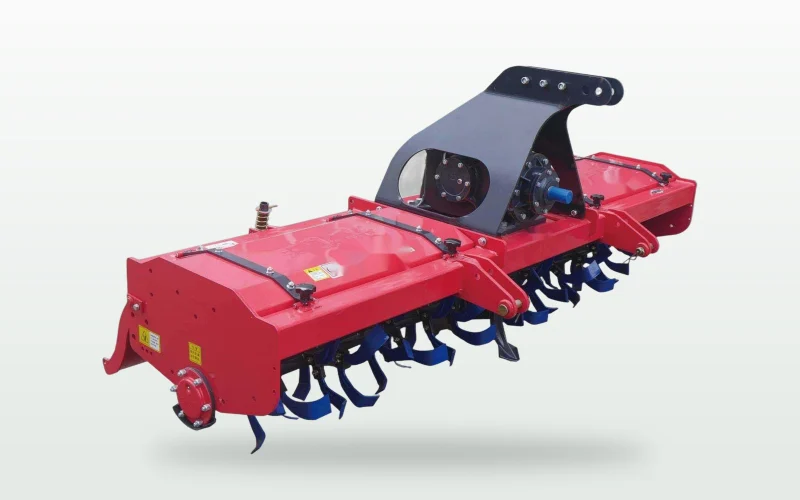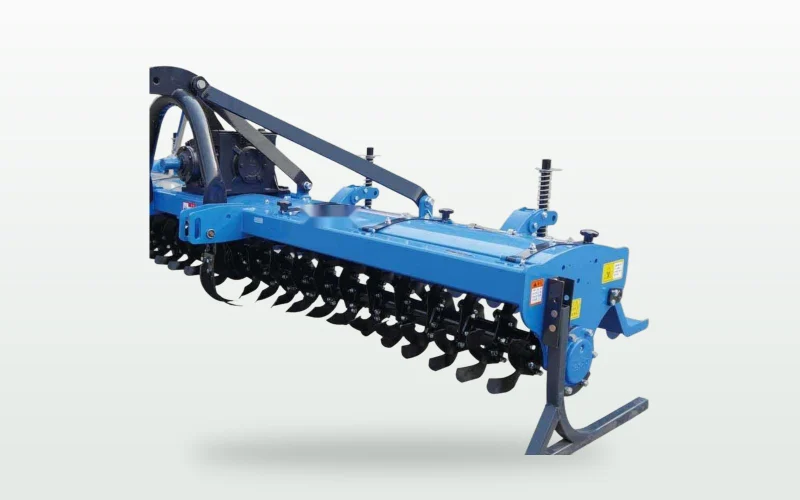
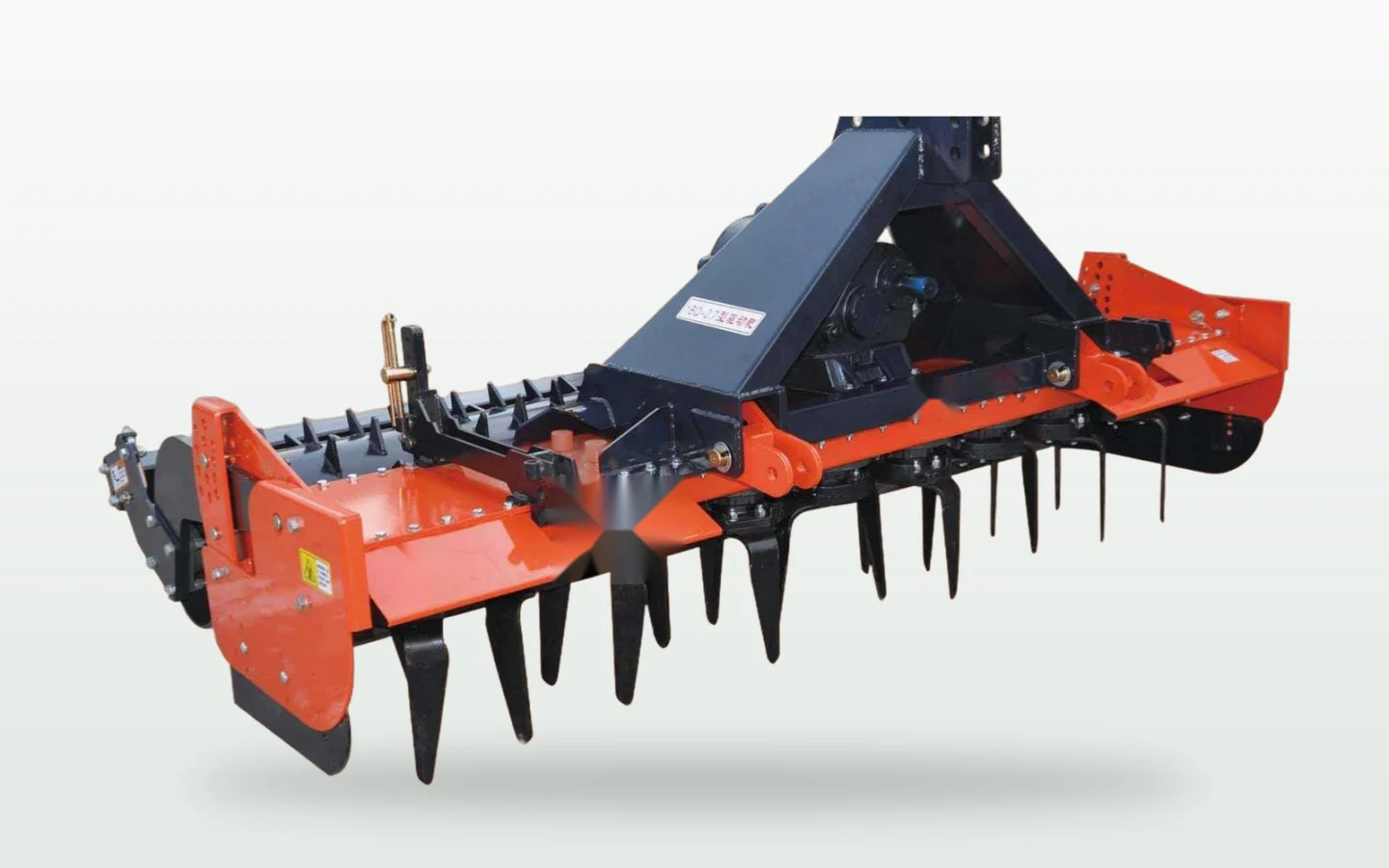
Dealers are often asked the same question: should I buy a rotary tiller or a power harrow? Both are PTO-driven, both prepare a seedbed, and both come in similar widths. The difference is in how they move the soil — and that decides which one suits a farm.
How each machine works
| Rotary tiller | Power harrow | |
|---|---|---|
| Rotor | One horizontal rotor with L or C blades | Pairs of vertical rotors turning in opposite directions |
| Soil action | Cuts, lifts and mixes soil and residue | Crumbles and levels without turning the soil over |
| Residue | Incorporates stubble and straw | Leaves residue mostly in place |
| Finish | Loose, well-mixed tilth | Fine, level seedbed firmed by a rear crumbler roller |
| Typical PTO (FENGLAN models) | 540–843 r/min depending on series | 1000 r/min recommended (FL-PH) |
Choose a rotary tiller when…
- You need to work in crop residue such as maize stubble or rice straw in one pass.
- The field has not been ploughed and you want primary and secondary tillage together.
- Your tractors are small or mid-size: our rotary tillers start at 1.25 m for 25 hp tractors.
- You work paddy fields — tillers such as the FL-RT-MB can be fitted with waterproof bearings.
Choose a power harrow when…
- The land is already ploughed or subsoiled and you need a fine seedbed for drilling.
- Soil is wet: vertical rotors do not bring wet soil to the surface or smear a pan at working depth the way a horizontal rotor can.
- You want to mount a seed drill behind and sow in the same pass.
- Your tractor has a 1000 r/min PTO and at least 90 hp for the 2.4–3.0 m FL-PH power harrows.
Horsepower and width
Size both machines by tractor power first. Our rotary tiller range covers 25–260 hp from 1.25 to 4.5 m; the FL-PH power harrow covers 90–160 hp from 2.4 to 3.0 m. For lighter secondary work, the 2.3 m rotary and twin-disc rotary harrows suit 80–130 hp tractors.
Should a dealer stock both?
In most markets, yes. Rotary tillers sell to the widest range of farms and tractor sizes; power harrows sell to arable farms that plough or subsoil first and sow with a drill. Both can share a container, together with blades and tines as spare parts.
Not sure which suits your customers? Send us your tractor sizes and soil types and we will recommend a mix.