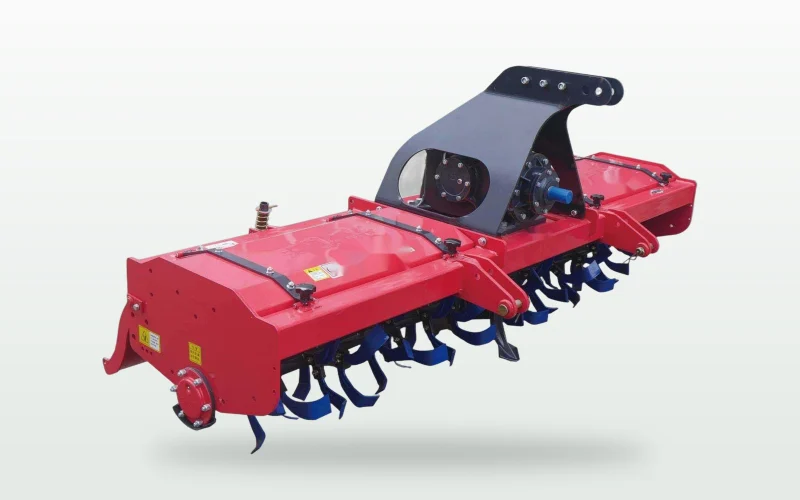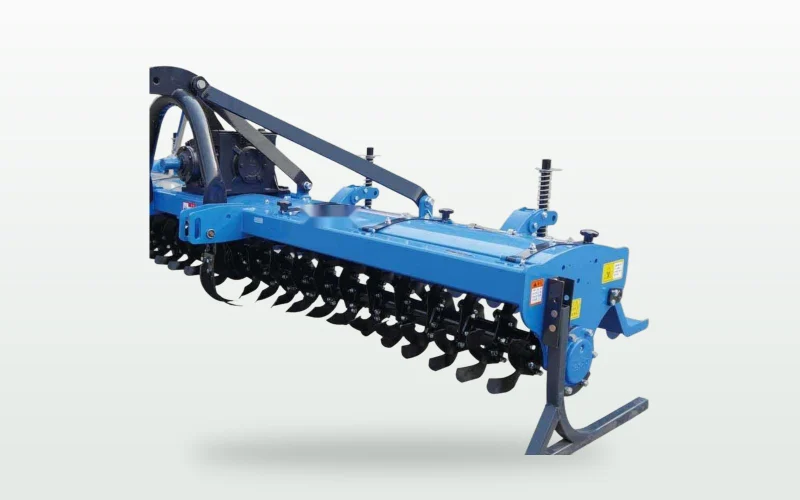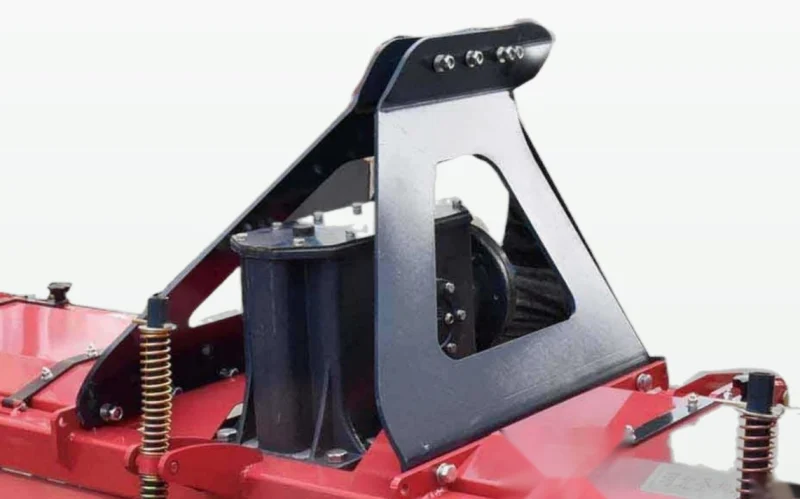
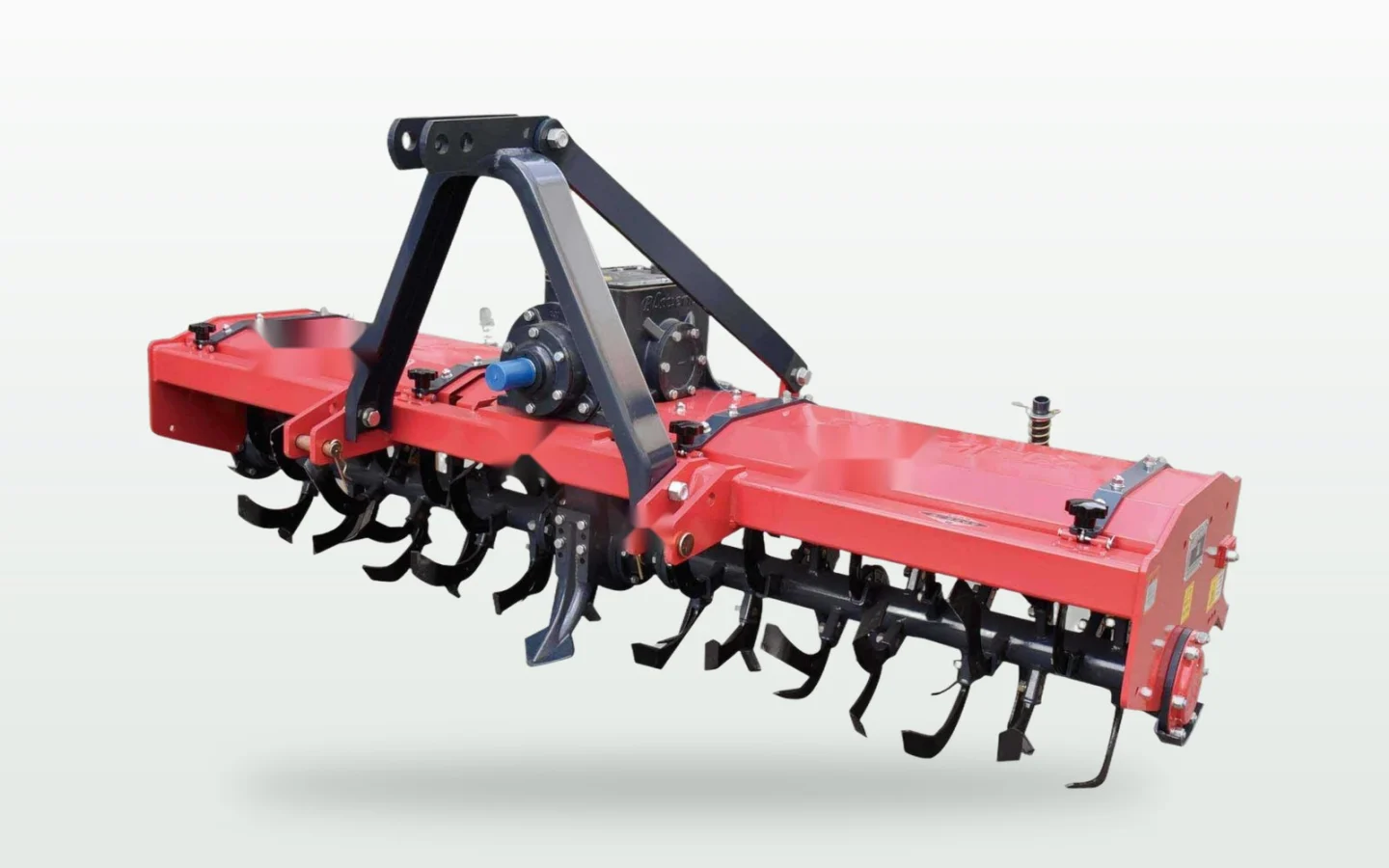
Tractor-mounted implements attach to the tractor’s three-point linkage. The linkage is standardised by category, defined in ISO 730, and the category sets the pin sizes and the spacing between the lower links. Before ordering a tiller, subsoiler or harrow for a market, a dealer must know which categories the local tractors use.
Category 1 and Category 2 at a glance
| Category 1 | Category 2 | |
|---|---|---|
| Typical tractor power | about 20–45 hp | about 40–100 hp |
| Top link pin | 19 mm (3/4 in) | 25.5 mm (1 in) |
| Lower link pins | 22.4 mm (7/8 in) | 28.7 mm (1 1/8 in) |
| Lower hitch spacing | 718 mm (28 in) | 870 mm (34 in) |
Above these, Category 3 (about 80–225 hp) and Category 4 (about 180–400 hp) use larger pins and wider spacing. Power ranges overlap, so the tractor’s own linkage — not just its horsepower — decides the category.
What to confirm before ordering
- Hitch category of the tractors your customers run, including whether quick-hitch frames are common.
- PTO speed and shaft: under ISO 500, 540 r/min tractors use a 1 3/8 in 6-spline shaft; 1000 r/min tractors use a 1 3/8 in 21-spline or 1 3/4 in 20-spline shaft.
- PTO drive shaft length and guard for the tractor-to-implement distance.
- Lift capacity of the tractor against the implement weight in our technical tables.
How FENGLAN AGRI handles it
Our technical tables give each implement’s tractor power, working width and listed PTO speeds. Hitch category, PTO shaft type and speed are confirmed against your tractor models at quotation, before production. Send us the tractor makes and models common in your market and we will match the implement configuration. See our tillage range or request a quote.